

Discovering you’re pregnant in college can feel overwhelming. Balancing classes, exams, and social life is already a challenge, and now you’re facing a life-changing situation.
You might be wondering how to manage your next assignment, let alone graduate. The good news is that you have rights, resources, and support to help you succeed. This guide explores your options, protections under Title IX, and local support in your city, ensuring you can make informed decisions about your future.
Take a Deep Breath: You’re Not Alone
It’s natural to feel panicked when you find out you’re pregnant. Pause, take a slow, deep breath, and exhale. You don’t have to navigate this alone.
Organizations like ICU Mobile are here to support you every step of the way, from pregnancy testing to graduation. Keep reading to learn about your rights as a pregnant college student, accommodations available, and resources to help you thrive.
Understanding Your Rights: What is Title IX?
Title IX is a federal law that protects students from discrimination based on pregnancy and parenting status.[1] Any college or university receiving federal funding—most do—must comply with Title IX regulations.
For pregnant students, this means your school cannot discriminate against you because of your pregnancy. Title IX ensures you have equal access to education and activities, with specific accommodations to support your academic success during pregnancy and childbirth.
Key Title IX Protections for Pregnant Students
Under Title IX, colleges must provide accommodations to ensure you can continue your education. These include[1]:
- Excused Absences: Absences due to pregnancy, childbirth, or related medical conditions must be excused.
- Make-Up Work: You’re entitled to make up missed assignments, exams, or coursework without penalty.
- Physical Accommodations: Access to larger desks, elevator use, or seating adjustments to accommodate your pregnancy.
- Frequent Restroom Breaks: Permission to take bathroom breaks as needed during classes or exams.
These protections ensure you can focus on your studies without unfair obstacles. If you face discrimination, contact your school’s Title IX coordinator immediately.
Can You Stay in Your Dorm While Pregnant?
Yes, you can stay in your dorm while pregnant. It’s illegal for a college to evict you from campus housing due to pregnancy. Title IX explicitly prohibits such discrimination.
If anyone tries to remove you from your dorm because you are pregnant, contact your campus Title IX coordinator. They’ll advocate for your rights and help resolve any issues.
Participating in Sports and Extracurriculars While Pregnant
Pregnancy doesn’t automatically disqualify you from sports or extracurricular activities. Title IX ensures you can continue participating in athletics, clubs, or other programs as long as it’s safe.
The decision to continue is yours, in consultation with your healthcare provider. Coaches, professors, or advisors cannot force you to stop participating. Always prioritize your health and safety, and discuss any concerns with your doctor.
Scholarships and Financial Support for Pregnant Students
Worried about the financial burden of college while pregnant? Good news: there are scholarships available for pregnant and parenting students.[2]
These awards can help cover tuition, books, and living expenses without the need for repayment, unlike loans. Organizations like Scholarships for Women offer grants tailored to your needs.
Will You Lose Scholarships Because of Pregnancy?
No, you cannot lose your scholarships because of pregnancy.[3] Title IX and the NCAA Model Pregnancy and Parenting Policy protect your financial aid.
As long as you maintain good academic standing and remain enrolled, your scholarships are secure. If you’re an athlete, your athletic scholarship is also protected under these regulations.
Health and Wellness: Prioritizing Your Well-Being
Pregnancy can be physically and emotionally demanding, especially while juggling college responsibilities. Here are some tips to stay healthy:
- Nutrition and Exercise: Eat a balanced diet and engage in safe, moderate exercise as approved by your doctor.
- Mental Health: Seek counseling or support groups to manage stress. Many colleges offer free mental health services.
- Prenatal Care: Schedule regular check-ups with a healthcare provider to monitor your health and your baby’s development.
Your campus health center may offer prenatal resources or referrals to local clinics. Don’t hesitate to ask for help.
What If I’m Considering Abortion?
Receive an Ultrasound
If you’re considering abortion, it’s important to receive an ultrasound to determine how far along you are and whether you’re at risk for a miscarriage or ectopic pregnancy.
It’s important to know how far along you are because the abortion pill is only FDA-approved for pregnancies up to 10 weeks gestation (or 70 days or less since the first day of your last menstrual period).[4] Additionally, state laws vary on how far along you can receive an abortion.
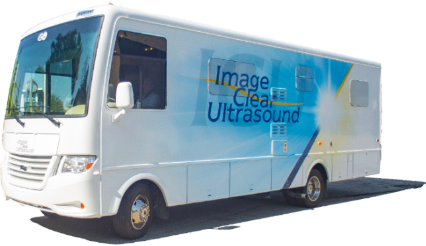
At ICU Mobile, we offer free ultrasounds, so you have accurate information before making any decision. Click the button below to find a mobile medical unit near you.
*Important note: Please be aware that this article is not meant to substitute for medical advice or treatment. The purpose of our limited ultrasound exams is to identify a pregnancy inside the uterus, detect the fetal heartbeat, and estimate how far along you are. If there is no detectable heartbeat, it may indicate a miscarriage or ectopic pregnancy is occurring. If we cannot detect a fetal heartbeat during your appointment, we will provide appropriate referrals for follow-up care and treatment.
Understand the Abortion Laws in Your State
Alabama: Currently, abortion is illegal in Alabama. However, exceptions can be made to preserve the health of the pregnant woman or if the pregnancy is the result of rape or incest.[5]
Arkansas: Currently, abortion is illegal in Arkansas. However, exceptions can be made to preserve the health of the pregnant woman.[6]
Florida: Currently, abortion is illegal in Florida past 6 weeks gestation, when the fetal heartbeat can first be detected by ultrasound. Exceptions can be made in cases of rape, incest, and human trafficking.[7]
Georgia: The current Georgia abortion law[8] prohibits abortion once a fetal heartbeat is detected, typically around 6 weeks from your last period. Exceptions can be made for:
- Medical emergencies
- Rape or incest in a pregnancy less than 20 weeks from the last menstrual period
- Cases in which, in reasonable medical judgment, there is an anomaly incompatible with sustaining life
Indiana: As of August 22, 2023, abortion is illegal in Indiana. However, exceptions can be made to prevent a serious health risk to the pregnant woman, if the fetus suffers from a lethal fetal anomaly, or if the pregnant woman has been the victim of rape or incest.[9]
Kentucky: Currently, abortion is illegal in Kentucky. However, exceptions can be made in the case of life endangerment to the pregnant woman.[10]
Mississippi: Currently, abortion is illegal in Mississippi. However, exceptions can be made to save the life of the pregnant woman or in cases of a rape conviction.[11]
North Carolina: Effective July 1, 2023, most abortions are illegal in North Carolina after 12 weeks gestation. However, exceptions can be made through 20 weeks in cases of rape and incest and through 24 weeks for “life-limiting” fetal anomalies and medical emergencies.[12]
Oklahoma: Currently, abortion is illegal in Oklahoma. However, exceptions can be made to save the life of the pregnant woman.[13]
Tennessee: Currently, abortion is illegal in Tennessee. However, exceptions can be made to save the life of the pregnant woman. Women who receive abortions will not be prosecuted under Tennessee law.[14]
Texas: Abortion is currently banned in Texas, except to preserve the life of the pregnant woman. This will not affect care for miscarriage or ectopic pregnancy. A woman who seeks or obtains an abortion will not be held criminally or civilly liable under Texas law.[15][16]
Arizona: Currently, abortion is legal in Arizona through fetal viability. Exceptions can be made beyond viability necessary to preserve the life or physical or mental health of the pregnant woman.[17]
California: Currently, abortion is legal up until viability* in California.[18]
Hawaii: Currently, abortion is legal up until viability* in Hawaii. Exceptions can be made beyond viability necessary to preserve the life or physical or mental health of the pregnant woman.[19]
Illinois: Currently, abortion is legal up until viability* in Illinois.[20]
Kansas: Currently, abortion is legal in Kansas up to 22 weeks of pregnancy.[21]
Michigan: Currently, abortion is legal in Michigan all throughout pregnancy.[22]
Ohio: Currently, abortion is legal up until viability* in Ohio. However, exceptions can be made if a healthcare professional deems it necessary to save the life of the pregnant woman.[23]
Pennsylvania: Currently, abortion is legal in Pennsylvania through the 24th week of pregnancy. Exceptions can be made if the health of the pregnant woman is in danger.[24]
*Viability refers to the point in pregnancy when a fetus is developed enough to survive outside the womb with medical help. It occurs at approximately 24 weeks of pregnancy.[25]
You’ve Got This
Getting pregnant in college is a significant moment, but it doesn’t define your future. With Title IX protections, scholarships, and support from ICU Mobile, you can continue your education and achieve your goals. Reach out today to explore your options and take control of your journey.
Support for Pregnant Students
Pregnancy might not have been part of your college plan, but it doesn’t have to derail your dreams.
ICU Mobile provides free, confidential services to empower you. From pregnancy testing to education on all your options—parenting, adoption, or abortion—our team is here to ensure you get the support you deserve through graduation and beyond.
Give us a call at (877) 231-2005 or schedule your appointment online today. Our mobile medical units are ready to serve you.
Please be aware that ICU Mobile does not provide or refer for abortion services.
Sources
- US Department of Education. (2020, January 10). Pregnant or Parenting? Title IX Protects You From Discrimination At School. Ed.gov. https://www2.ed.gov/about/offices/list/ocr/docs/dcl-know-rights-201306-title-ix.html
- College Grants & Scholarships for Pregnant Women. Scholarships for Women. (n.d.). https://www.scholarshipsforwomen.net/pregnant/
- A Review of Federal Law and NCAA Rules Impacting Treatment of Pregnant and Parenting Student-Athletes. NCAA.org. (n.d.). http://s3.amazonaws.com/ncaa.org/documents/2021/1/18/Model_Policy_Legal_Review.pdf
- Center for Drug Evaluation and Research. (2025, January 17). Mifeprex (Mifepristone). U.S. Food and Drug Administration. https://www.fda.gov/drugs/postmarket-drug-safety-information-patients-and-providers/mifeprex-mifepristone-information
- Alabama Legislature. (2025, February 4). House Bill 50. https://alison.legislature.state.al.us/files/pdf/SearchableInstruments/2025RS/HB50-int.pdf
- Arkansas General Assembly. Arkansas Unborn Child Protection Act (SB6). Arkansas State Legislature. (2021, February 9, 2021). https://arkleg.state.ar.us/Home/FTPDocument?path=%2FBills%2F2021R%2FPublic%2FSB6.pdf
- The Florida Senate. (2023, April 14). SB 300: Pregnancy and Parenting Support. https://www.flsenate.gov/Session/Bill/2023/300
- Georgia General Assembly. (2019, May 7). House Bill 481. https://www.legis.ga.gov/api/legislation/document/20192020/187013
- Indiana State Medical Association. (2023, August 23). Abortion law in effect after IN Supreme Court denies rehearing. https://ismanet.org/ISMA/Resources/e-Reports/8-23-23/Abortion_law_in_effect.aspx
- Commonwealth of Kentucky Office of the Attorney General. (2022, June 24). Human Life Protection Act. Attorney General Daniel Cameron. https://www.ag.ky.gov/Press%20Release%20Attachments/Human%20Life%20Protection%20Act%20Advisory.pdf
- Michael Watson, Secretary of State. (2022, June 27). Mississippi Abortion Notice Published in Administrative Bulletin. https://www.sos.ms.gov/press/mississippi-abortion-notice-published-administrative-bulletin
- North Carolina General Assembly. (2023, May 4). SENATE BILL 20 RATIFIED BILL. https://www.ncleg.gov/Sessions/2023/Bills/Senate/PDF/S20v5.pdf
- Oklahoma House of Representatives. (2022, March 21). HB4327 Floor Amendment 8 Bill Summary. https://www.oklegislature.gov/cf_pdf/2021-22%20SUPPORT%20DOCUMENTS/BILLSUM/House/HB4327%20FA8%20BILLSUM.PDF
- Tennessee General Assembly. (2022, June). Human Life Protection Act. https://wapp.capitol.tn.gov/apps/BillInfo/default.aspx?BillNumber=HB1029&GA=111
- Texas Constitution and Statutes. (2022, August 25). Health and Safety Code Chapter 170A. Performance of Abortion. https://statutes.capitol.texas.gov/Docs/HS/htm/HS.170A.htm
- Texas Constitution and Statutes. (2021, September 1). Health and Safety Code Chapter 171. Abortion. https://statutes.capitol.texas.gov/Docs/HS/pdf/HS.171.pdf
- Arizona Attorney General Kris Mayes. Arizona Abortion Laws. (2024, November 5). https://www.azag.gov/issues/reproductive-rights/laws
- Executive Department, State of California. (2019, May 31). Proclamation on Reproductive Freedom. https://www.gov.ca.gov/wp-content/uploads/2019/05/Proclamation-on-Reproductive-Freedom.pdf
- Hawaii State Legislature. (2023). H.B. NO. 1491. https://data.capitol.hawaii.gov/sessions/session2024/bills/SB1491_.HTM
- Illinois General Assembly. (2023, February 15). HB2606. https://www.ilga.gov/legislation/103/HB/10300HB2606.htm
- Kansas State Legislature. (2022). Article 67. ABORTION. https://www.kslegislature.org/li/b2023_24/statute/065_000_0000_chapter/065_067_0000_article/065_067_0003_section/065_067_0003_k/
- Michigan Legislature. (2023). House Bill 4949. https://www.legislature.mi.gov/Bills/Bill?ObjectName=2023-HB-4949
- Ohio Secretary of State. (2023, December 7). Article I, Section 22 — Ohio Constitution: The Right to Reproductive Freedom with Protections for Health and Safety. Ohio Laws & Administrative Code. https://codes.ohio.gov/ohio-constitution/section-1.22
- Pennsylvania General Assembly. (2025, January 8). House Bill 26. https://www.palegis.us/legislation/bills/2025/hb26
- Breborowicz, G. (2001, January). Limits of fetal viability and its enhancement. U.S. National Library of Medicine. https://pubmed.ncbi.nlm.nih.gov/11753511/
All Services Offered are Free
Pregnancy Testing, Ultrasound, and Community Referrals