

If you’ve just discovered you’re pregnant and it’s not what you planned, you’re probably researching your abortion options.
Before contacting an abortion clinic, it’s important to know the types of abortion procedures. You should also understand when they can be done and what risks and side effects they may have.
This knowledge equips you to make a well-informed decision about your next steps. Keep reading to learn more about first-trimester abortions, second-trimester abortions, and what to expect!
First-Trimester Abortion Procedures
The first trimester spans from conception to the end of week 13. During this period, abortion providers typically offer medical abortions or dilation and curettage (D&C) procedures.
What Is a Medical Abortion?
A medical abortion, commonly known as the abortion pill, uses two medications: mifepristone and misoprostol. It’s FDA-approved for use up to 10 weeks of pregnancy.[1]
The first medication, mifepristone, interferes with progesterone receptors and prevents the pregnancy from developing. The second medication, misoprostol, causes the uterus to cramp and expel the pregnancy.[1]
Mifepristone is usually taken in an abortion clinic. Misoprostol is taken 24 to 48 hours later at home.[1] The bleeding and cramping will begin between 2 to 24 hours after taking misoprostol.[2] Most women expel the pregnancy within that same timeframe.[3]
The experience can feel like a heavy period, though intensity varies. Recovery often involves rest and over-the-counter pain relief, but follow-up care may be needed if bleeding persists.
What Is Dilation and Curettage (D&C)?
A dilation and curettage (D&C), also called vacuum aspiration abortion, is a surgical abortion available up to 13 weeks of pregnancy.[4] It’s often completed in under 30 minutes.
Hours before or the day before the procedure, small instruments or a medication is used to open (dilate) the cervix. Misoprostol may be given to soften the cervix.[5]
During the procedure, the abortion provider will use a spoon-shaped device called a curette to scrape out the tissue from the uterus. They may also use a suction device at the end to remove any remaining tissue that was missed by the curette.[5]
Second-Trimester Abortion Procedures
The second trimester runs from week 13 to week 27. During this stage, dilation and evacuation (D&E) becomes the standard procedure due to the pregnancy’s advanced development.
What Is Dilation and Evacuation (D&E)?
A dilation and evacuation (D&E) is a surgical abortion most often performed in the second trimester.[6] It’s more complex than a D&C due to the fetus’s size and requires skilled providers.
Here’s how a dilation and evacuation works:
- Cervix Dilation: The day before, sponge-like sticks (laminaria) are inserted into the cervix, absorbing moisture to expand and open it gradually. Medication may also be used overnight to soften the cervix.[6]
- Procedure: A cannula suctions out uterine contents, and forceps remove remaining tissue.[6]
D&E procedures typically take 10-30 minutes and are done under anesthesia. You may experience cramping and bleeding for up to two weeks, with a follow-up visit to ensure everything is complete.
Risks and Side Effects of Abortion
Every abortion type—medical or surgical—carries risks and side effects. Understanding these can help you weigh your options.
Medical Abortion Side Effects and Risks
After a medical abortion, expect vaginal bleeding or spotting for 9-16 days, though it can last 30 days or longer in some cases.[2]
Other common side effects include[2]:
- Abdominal cramping (from misoprostol)
- Headaches
- Nausea and vomiting
- Diarrhea and digestive discomfort
- Chills or mild fever
Severe risks to watch for:
- Hemorrhaging: Bleeding that soaks two full-size pads per hour for 2+ hours requires immediate attention.[7]
- Incomplete Abortion: If tissue remains, emergency surgery may be needed to prevent infection.[8]
- Infection: Persistent fever, nausea, or vomiting beyond 24 hours post-misoprostol could indicate an infection, potentially requiring antibiotics or surgery.[2]
Surgical Abortion Side Effects and Risks
D&C and D&E procedures carry risks such as:
- Uterine Perforation: An instrument may accidentally puncture the uterus, possibly needing surgical repair.[9]
- Asherman Syndrome: Scar tissue inside the uterus from repeated procedures can impact future fertility.[10]
- Pelvic Inflammatory Disease (PID): Bacteria introduced during surgery may cause infection in the reproductive tract.[11]
- Intense Pain: Studies show second-trimester abortions like D&E can be more painful than expected.[12]
Is Abortion Legal in My State?
With all of this in mind, you may be wondering what your abortion options are. It all depends on how far along you are and the abortion laws in your state. Here’s a breakdown:
Alabama
Currently, abortion is illegal in Alabama. However, exceptions can be made to preserve the health of the pregnant woman or if the pregnancy is the result of rape or incest.[13]
Florida
Currently, abortion is illegal in Florida past 6 weeks gestation, when the fetal heartbeat can first be detected by ultrasound. Exceptions can be made in cases of rape, incest, and human trafficking.[17]
Indiana
As of August 22, 2023, abortion is illegal in Indiana. However, exceptions can be made to prevent a serious health risk to the pregnant woman, if the fetus suffers from a lethal fetal anomaly, or if the pregnant woman has been the victim of rape or incest.[21]
Mississippi
Currently, abortion is illegal in Mississippi. However, exceptions can be made to save the life of the pregnant woman or in cases of a rape conviction.[25]
Pennsylvania
Currently, abortion is legal in Pennsylvania through the 24th week of pregnancy. Exceptions can be made if the health of the pregnant woman is in danger.[29]
Arizona
Currently, abortion is legal in Arizona through fetal viability. Exceptions can be made beyond viability necessary to preserve the life or physical or mental health of the pregnant woman.[14]
Georgia
The current Georgia abortion law[18] prohibits abortion once a fetal heartbeat is detected, typically around 6 weeks from your last period. Exceptions can be made for:
- Medical emergencies
- Rape or incest in a pregnancy less than 20 weeks from the last menstrual period
- Cases that in reasonable medical judgment there is an anomaly incompatible with sustaining life
Kansas
Currently, abortion is legal in Kansas up to 22 weeks of pregnancy.[22]
North Carolina
Effective July 1, 2023, most abortions are illegal in North Carolina after 12 weeks gestation. However, exceptions can be made through 20 weeks in cases of rape and incest and through 24 weeks for “life-limiting” fetal anomalies and medical emergencies.[26]
Tennessee
Currently, abortion is illegal in Tennessee. However, exceptions can be made to save the life of the pregnant woman. Women who receive abortions will not be prosecuted under Tennessee law.[30]
Arkansas
Currently, abortion is illegal in Arkansas. However, exceptions can be made to preserve the health of the pregnant woman.[15]
Hawaii
Currently, abortion is legal up until viability* in Hawaii. Exceptions can be made beyond viability necessary to preserve the life or physical or mental health of the pregnant woman.[19]
Kentucky
Currently, abortion is illegal in Kentucky. However, exceptions can be made in the case of life endangerment to the pregnant woman.[23]
Ohio
Currently, abortion is legal up until viability* in Ohio. However, exceptions can be made if a healthcare professional deems it necessary to save the life of the pregnant woman.[27]
Texas
Abortion is currently banned in Texas, except to preserve the life of the pregnant woman. This will not affect care for miscarriage or ectopic pregnancy. A woman who seeks or obtains an abortion will not be held criminally or civilly liable under Texas law.[31][32]
California
Currently, abortion is legal up until viability* in California.[16]
Illinois
Currently, abortion is legal up until viability* in Illinois.[20]
Michigan
Currently, abortion is legal in Michigan all throughout pregnancy.[24]
Oklahoma
Currently, abortion is illegal in Oklahoma. However, exceptions can be made to save the life of the pregnant woman.[28]
*Viability refers to the point in pregnancy when a fetus is developed enough to survive outside the womb with medical help. It occurs at approximately 24 weeks of pregnancy.[33]
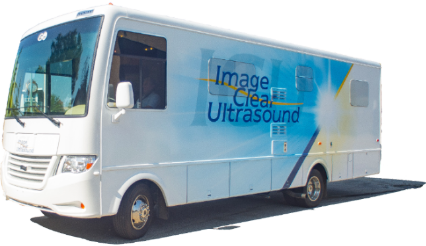
Before choosing abortion, visit ICU Mobile for a free ultrasound. This will determine:
- How far along you are
- The location of your pregnancy
- Whether your pregnancy is viable
This will help you understand what options are available to you and make a fully informed decision.
Have Questions About Abortion in ? Get the Facts at ICU Mobile.
If you’re exploring abortion, you don’t have to navigate it alone. The caring team at ICU Mobile provides free, confidential guidance to help you make the best choice for your health and future.
Call us at (877) 231-2005 or schedule an appointment online today.
Please be aware that ICU Mobile does not provide or refer for abortion services.
Sources
- FDA. (2025, February 11). Questions and Answers on Mifepristone for Medical Termination of Pregnancy Through Ten Weeks Gestation. https://www.fda.gov/drugs/postmarket-drug-safety-information-patients-and-providers/questions-and-answers-mifepristone-medical-termination-pregnancy-through-ten-weeks-gestation?sm_guid=NTU1NzgyfDYzMDE1OTM2fC0xfGppbUBha2ZhbWlseS5vcmd8NTY4OTI4MXx8MHwwfDE5OTYwMDk4OHwxMDg2fDB8MHx8NTQ3NzI2fDA1
- U.S. National Library of Medicine. (2024, November 15). Mifepristone (Mifeprex). MedlinePlus. https://medlineplus.gov/druginfo/meds/a600042.html
- Mifepristone (oral route). Mayo Clinic. (2025, February 1). https://www.mayoclinic.org/drugs-supplements/mifepristone-oral-route/description/drg-20067123
- Cleveland Clinic. (2024, February 9). Dilation and Curettage (D & C). https://my.clevelandclinic.org/health/procedures/dilation-and-curettage
- Mayo Clinic. (2023, November 7). Dilation and curettage (D&C). https://www.mayoclinic.org/tests-procedures/dilation-and-curettage/about/pac-20384910
- Cooper, D. B., & Menefee, G. W. (2023, May 7). Dilation and Curettage. StatPearls [Internet]. https://www.ncbi.nlm.nih.gov/books/NBK568791/
- Danco Laboratories, LLC & FDA. (2016, March). Mifeprex Label. FDA. https://www.accessdata.fda.gov/drugsatfda_docs/label/2016/020687s020lbl.pdf
- Mayo Clinic. (2024, June 28). Medical Abortion. https://www.mayoclinic.org/tests-procedures/medical-abortion/about/pac-20394687
- U.S. National Library of Medicine. (2024, April 5). Abortion – Surgical. MedlinePlus. https://medlineplus.gov/ency/article/002912.htm
- Mayo Clinic. (2024, July 6). Elective Abortion: Does it Affect Subsequent Pregnancies? https://www.mayoclinic.org/healthy-lifestyle/getting-pregnant/expert-answers/abortion/faq-20058551
- Mayo Clinic. (2022, April 30). Pelvic Inflammatory Disease (PID). https://www.mayoclinic.org/diseases-conditions/pelvic-inflammatory-disease/symptoms-causes/syc-20352594
- Dzuba, I. G., Chandrasekaran, S., Fix, L., Blanchard, K., & King, E. (2022, May 12). Pain, Side Effects, and Abortion Experience Among People Seeking Abortion Care in the Second Trimester. Women’s Health Reports (New Rochelle, N.Y.). https://www.ncbi.nlm.nih.gov/pmc/articles/PMC9148646/
- Alabama Legislature. (2025, February 4). House Bill 50. https://alison.legislature.state.al.us/files/pdf/SearchableInstruments/2025RS/HB50-int.pdf
- Arizona Attorney General Kris Mayes. Arizona Abortion Laws. (2024, November 5). https://www.azag.gov/issues/reproductive-rights/laws
- Arkansas General Assembly. Arkansas Unborn Child Protection Act (SB6). Arkansas State Legislature. (2021, February 9, 2021). https://arkleg.state.ar.us/Home/FTPDocument?path=%2FBills%2F2021R%2FPublic%2FSB6.pdf
- Executive Department, State of California. (2019, May 31). Proclamation on Reproductive Freedom. https://www.gov.ca.gov/wp-content/uploads/2019/05/Proclamation-on-Reproductive-Freedom.pdf
- The Florida Senate. (2023, April 14). SB 300: Pregnancy and Parenting Support. https://www.flsenate.gov/Session/Bill/2023/300
- Georgia General Assembly. (2019, May 7). House Bill 481. https://www.legis.ga.gov/api/legislation/document/20192020/187013
- Hawaii State Legislature. H.B. NO. 1491. (2023). https://data.capitol.hawaii.gov/sessions/session2024/bills/SB1491_.HTM
- Illinois General Assembly. HB2606. (2023, February 15). https://www.ilga.gov/legislation/103/HB/10300HB2606.htm
- Indiana Department of Health. (2023, August 22). Guidance Regarding the Regulatory Implementation of Senate Enrolled Act 1 – 2022 (ss). IN.gov. https://www.in.gov/health/cshcr/files/SEA1-Regulatory-Guidance-2023-Aug-22.pdf
- Kansas State Legislature. Article 67. ABORTION. (2022). https://www.kslegislature.org/li/b2023_24/statute/065_000_0000_chapter/065_067_0000_article/065_067_0003_section/065_067_0003_k/
- Commonwealth of Kentucky Office of the Attorney General. (2022, June 24). Human Life Protection Act. Attorney General Daniel Cameron. https://www.ag.ky.gov/Press%20Release%20Attachments/Human%20Life%20Protection%20Act%20Advisory.pdf
- Michigan Legislature. House Bill 4949. (2023). https://www.legislature.mi.gov/Bills/Bill?ObjectName=2023-HB-4949
- Michael Watson, Secretary of State. (2022, June 27). Mississippi Abortion Notice Published in Administrative Bulletin. https://www.sos.ms.gov/press/mississippi-abortion-notice-published-administrative-bulletin
- North Carolina General Assembly. (2023, May 4). SENATE BILL 20 RATIFIED BILL. https://www.ncleg.gov/Sessions/2023/Bills/Senate/PDF/S20v5.pdf
- Ohio Secretary of State. (2023, December 7). Article I, Section 22 — Ohio Constitution: The Right to Reproductive Freedom with Protections for Health and Safety. Ohio Laws & Administrative Code. https://codes.ohio.gov/ohio-constitution/section-1.22
- Oklahoma House of Representatives. HB4327 Floor Amendment 8 Bill Summary. (2022, March 21). https://www.oklegislature.gov/cf_pdf/2021-22%20SUPPORT%20DOCUMENTS/BILLSUM/House/HB4327%20FA8%20BILLSUM.PDF
- Pennsylvania General Assembly. (2025, January 8). House Bill 26. https://www.palegis.us/legislation/bills/2025/hb26
- Tennessee General Assembly. (2022, June). Human Life Protection Act. https://wapp.capitol.tn.gov/apps/BillInfo/default.aspx?BillNumber=HB1029&GA=111
- Texas Constitution and Statutes. (2022, August 25). Health and Safety Code Chapter 170A. Performance of Abortion. https://statutes.capitol.texas.gov/Docs/HS/htm/HS.170A.htm
- Texas Constitution and Statutes. (2021, September 1). Health and Safety Code Chapter 171. Abortion. https://statutes.capitol.texas.gov/Docs/HS/pdf/HS.171.pdf
- Breborowicz, G. (2001, January). Limits of fetal viability and its enhancement. U.S. National Library of Medicine. https://pubmed.ncbi.nlm.nih.gov/11753511/
All Services Offered are Free
Pregnancy Testing, Ultrasound, and Community Referrals